

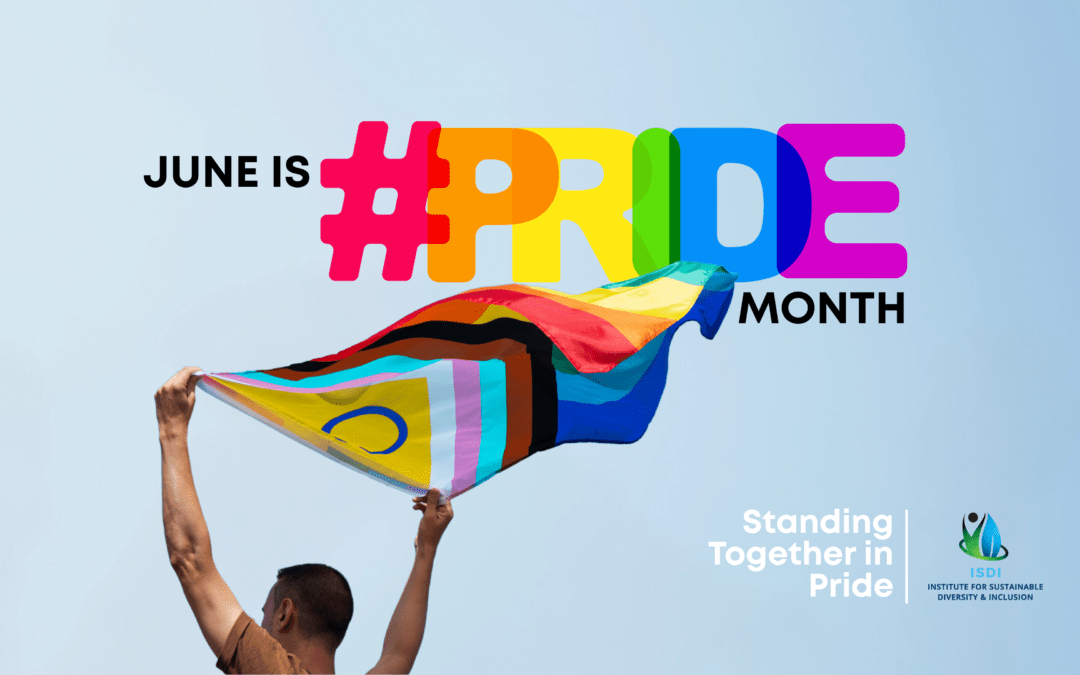
By Abigail Depositar, Project Manager, ISDI
Pride, Permission, and the Difference Between Being Seen and Feeling Safe
Why Pride Month still matters—and why “coming out” isn’t the whole story
A few years ago, someone asked me a question that has stayed with me ever since.
“Why don’t more people just come out?”
It wasn’t a hostile question. It was genuine curiosity. But it revealed something interesting.
The question assumes that coming out is simply a matter of courage.
Sometimes it is.
But often, it’s a matter of safety.
And those are not the same thing.
As Pride Month arrives this year, I’ve been thinking about how much the conversation around LGBTQ+ visibility has changed and how much it hasn’t.
In some places, rainbow logos appear every June. Companies host Pride events. Organizations publish statements of support. Progress has been made, and that’s worth celebrating.
At the same time, many LGBTQ+ people are looking at the current climate in the United States and wondering what comes next. Rights that once felt settled are being debated again. Schools, workplaces, healthcare systems, and communities are wrestling with questions that directly affect LGBTQ+ lives.
In moments like these, Pride can feel complicated.
It is both a celebration and a reminder. A celebration of how far we’ve come. A reminder that belonging is never something we can take for granted.
The Difference Between Being Seen and Feeling Safe
One of the most interesting findings I’ve come across recently came from research by Boston Consulting Group.
They surveyed more than 27,000 employees across 16 countries and found something powerful: people who felt free to be their authentic selves at work reported dramatically higher levels of inclusion, belonging, happiness, and engagement. They were also far less likely to leave their jobs.
That might sound obvious. Of course people do better when they can be themselves.
But what struck me wasn’t the finding itself.
It was the realization that authenticity isn’t something an organization can demand from people.
You can’t tell someone, “Be yourself.”
And then expect them to magically feel safe.
Safety comes first.
Trust comes first.
Belonging comes first.
Only then does authenticity become possible.
The study found that LGBTQ+ employees who were out to some of their coworkers were significantly more likely to feel they could be their authentic selves at work than those who were not out.
That’s not because being out automatically creates belonging.
It’s because belonging makes being out possible.
Maybe the Better Question Isn’t “Why Won’t They Come Out?”
Maybe the better question is:
“Have we created an environment where someone would want to?”
I came across a phrase that I like much more than “coming out.”
Inviting in.
Coming out places all the responsibility on the LGBTQ+ person.
Inviting in asks something of the community.
It asks:
Have we created enough trust? Have we shown enough care? Have we demonstrated that someone’s honesty will be met with respect instead of judgment?
Because for many LGBTQ+ people, there isn’t just one coming out. There are dozens. Sometimes hundreds.
Every situation involves a calculation that many people never have to make.
Is it safe? Will this change how they see me? Will this affect my opportunities? Will I still belong?
That calculation can be exhausting.
Which is why Pride has never been only about visibility.
It’s also about creating conditions where visibility isn’t dangerous.
What Allyship Actually Looks Like
One thing I appreciate about the work coming from Out & Equal is their reminder that allyship isn’t a label. It’s a practice. It isn’t something you become once and then check off a list. It’s something you do repeatedly through actions, choices, and everyday behavior.
Real allyship isn’t about having the perfect language or posting a rainbow once a year, but it’s about making sure people don’t have to carry the entire burden of belonging by themselves alone.
Sometimes that looks big like advocating for inclusive policies, supporting employee resource groups, challenging exclusion when it happens.
Sometimes it looks small like correcting yourself when you make a mistake, making room for someone’s perspective, refusing to laugh at a joke that comes at someone else’s expense.
The point isn’t perfection but PARTICIPATION..
Because belonging isn’t built through grand gestures alone.
It’s built through repetition, consistency, and showing people, over and over again, that they matter.
Queer Joy Is an Act of Resistance
Pride began as a protest, and that history still matters.
In a time when LGBTQ+ identities are once again being debated in legislatures, schools, workplaces, and communities, visibility can feel deeply personal. For some people, simply being seen is an act of courage.
That’s why I keep coming back to the idea that queer joy is more than celebration. It is resistance.
Not because LGBTQ+ people owe anyone a statement simply by existing, but because there is power in refusing to disappear. There is power in building a life that is full, visible, and authentic when others would prefer you stay quiet, stay hidden, or stay small.
We often talk about the challenges facing LGBTQ+ communities—and those challenges are real. But queer lives are not defined only by struggle. They are also defined by friendship, creativity, humor, love, family, achievement, community, and joy.
That matters.
Joy pushes back against the idea that LGBTQ+ people should only be seen through the lens of hardship. It reminds us that LGBTQ+ people are not just surviving. They are creating, contributing, leading, loving, celebrating, and building lives worth celebrating.
In that way, joy becomes its own form of resilience.
It helps people keep going when the headlines feel heavy. It creates space for hope when uncertainty creeps in. It reminds us that belonging is not something we have to wait for before we can experience happiness.
At the same time, Pride is not a one-size-fits-all experience.
For some people, Pride means being fully out and openly celebrated by the people around them. For others, the decision to share their identity still comes with real risks. Family dynamics, workplace environments, financial realities, cultural expectations, and personal safety all shape those decisions.
That is why I think about Pride not only in terms of coming out, but also in terms of being invited in.
Being invited into workplaces where people do not have to hide important parts of themselves. Being invited into communities where respect is not conditional. Being invited into conversations where people are treated with dignity, regardless of who they are or who they love.
The goal is not to pressure people into visibility. The goal is to create environments where visibility feels safe.
And until that day comes for everyone, we can continue building spaces where people know they are valued, respected, and welcome exactly as they are.
So if you’re out, we celebrate you.
If you’re still figuring things out, we celebrate you.
If you’re not in a place where being visible feels safe yet, we see you.
Because belonging is not something you earn once you’ve explained yourself.
Belonging is not something granted after you’ve proven you’re worthy.
Belonging is your birthright.
And no law, policy, headline, or opinion can take away what has always been true:
You were never asking for permission to exist.
You already do.
Happy Pride. 🌈
References
Boston Consulting Group. (2023). Inclusion Isn’t Just Nice. It’s Necessary: How a survey quantifying the responses of more than 27,000 employees proves the business value of inclusion. Boston Consulting Group.
Out & Equal. (2026). Authentic Allyship. Out & Equal Workplace Advocates.
We can’t wait to see you at the next workshop.
Until then, please share this post with anyone you think would be interested.
LinkedIn Facebook Instagram Bluesky Threads