

Workshop #4 2026
Leading without Bias:
Unleashing Creativity and Innovation Inclusively
Wednesday, Sept. 23, 2026
9:00 a.m.-11:00 a.m. Pacific / 12:00-2:00 p.m. Eastern
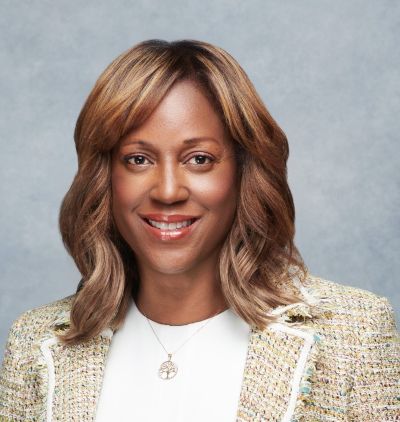
Presenter: Shari Dunn
Profile on LinkedIn

Leading without bias begins with an uncomfortable admission: no one leads without bias until they can name the bias they are already leading with.
Every organization says it wants creativity and innovation. Both require the same raw material — people who see what the group is missing, and who are free enough to say it out loud. Bias is expensive precisely because it taxes that freedom. It rarely arrives as hostility. It arrives as a standard applied unevenly, a hire decided on fit, an idea that lands differently depending on who says it.
This session examines one of the most costly and least examined of those patterns: Competency Checking™ — the repeated demand that certain people prove, and re-prove, that they belong in the room. Drawing on her book, Qualified: How Competency Checking and Race Collide at Work (HarperCollins), presenter for this session, Shari Dunn, traces how competency checking gets built into ordinary systems — hiring criteria, stretch assignments, feedback, who receives credit and who receives scrutiny — and what it costs an organization in ideas that never get said, tried, or funded.
“Bias almost never announces itself. It shows up as a standard — and standards feel neutral right up until you ask who wrote them.”
From there the session turns to practice. Shari’s frame is Applied Equity™: equity as something applied to a decision, not a value declared in a statement. Participants work with the decisions and processes they actually own, and leave with language for interrupting bias in real time in a way that keeps people in the conversation rather than shutting it down.
This is a working session. Expect dialogue, a live poll, and a breakout built around a decision you bring with you. Participants who arrive with one process in mind — a hiring loop, a promotion cycle, a project assignment, a performance review template — will get the most out of it.
Learning Outcomes:
By the end of this workshop, participants will be able to:
- Define competency checking and identify where it enters everyday leadership decisions — hiring, assignments, feedback, credit, and airtime.
- Explain how biased decision patterns suppress creativity and innovation on a team, and describe that mechanism to a peer.
- Analyze one decision or process they personally own using an Applied Equity lens, naming the criteria in use and who those criteria advantage.
- Use at least one non-shaming move to interrupt bias in a live conversation
Presenter:
Shari Dunn is the Founder and CEO of ITBOM LLC, where she advises Fortune 100 companies, foundations, nonprofits, and government agencies across Applied Equity, strategic planning, and executive communication.
She is the author of Qualified: How Competency Checking and Race Collide at Work (HarperCollins), shortlisted for SABEW’s Best Business Book of the Year, and is currently writing Shamed: How Our Hatred of Victims Fuels a Culture of Harm.
A former practicing attorney representing victims of domestic violence, television journalist, educator, funder, and nonprofit executive, she is an international keynote speaker who has addressed congressional leaders at the Library of Congress, the British Library, and conferences across the United Kingdom.
An American Leadership Forum Fellow whose honors include Executive of the Year and Portland Business Journal’s Women of Influence Award, her work has been featured in TIME, Fast Company, Fortune, Bloomberg, and The Wall Street Journal.
She holds a BA in Philosophy from Marquette University and a JD from Northwestern University Pritzker School of Law.
HR Continuing Education Credit:
Our two-hour Learning Series workshops provide 2.0 HR (general) recertification credit hours through the HR Certification Institute® (HRCI) or Society for Human Resource Management (SHRM)®, toward aPHR™, aPHRi™, PHR®, PHRca®, SPHR®, GPHR®, PHRi™, SHRM and SPHRi™.
Live Virtual Sessions and Recordings:
ALL Sessions are conducted live virtually on the dates listed above. If granted permission by the Session presenter(s), we will share the webinar recording with registered attendees for four weeks after each Session.
Accessibility:
American Sign Language (ASL) interpretation, by certified interpreters, is available upon request. If you need an accommodation, please contact Series Project Manager, Abi Depositar, at isdi.admin@i4sdi.org. Requests MUST be made at least TWO weeks prior to the session.


